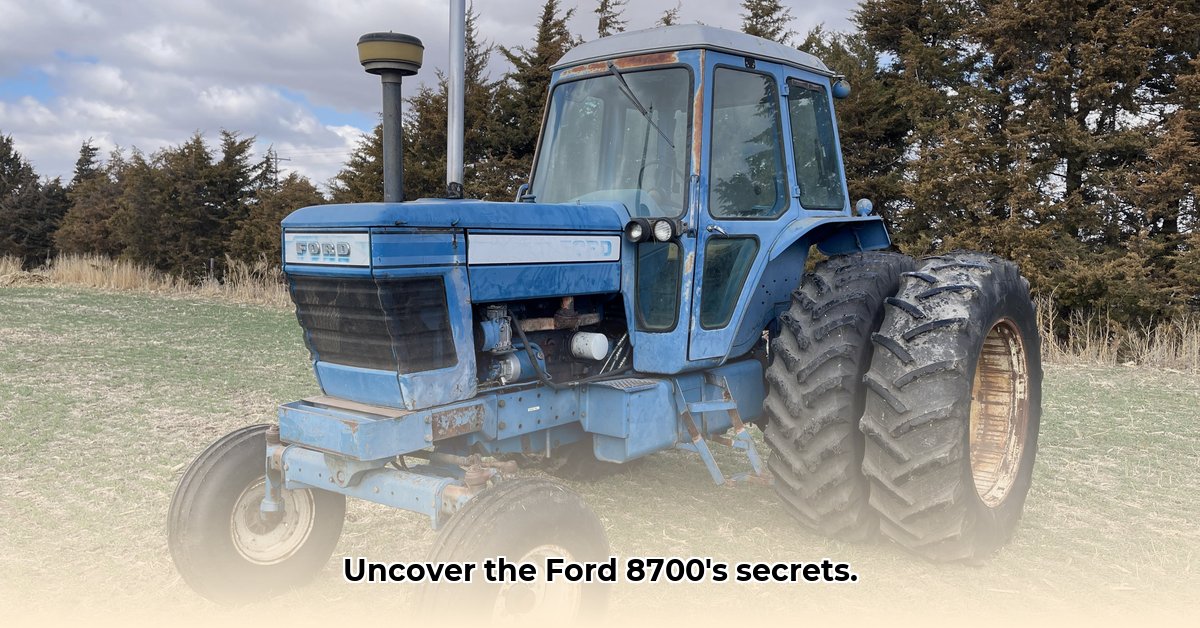
The Ford 8700 tractor, a stalwart of the late 1970s agricultural landscape, represents a fascinating chapter in farming history. This guide delves into its technical specifications, historical context, and practical restoration advice, acknowledging the challenges of sourcing information for this vintage machine. Whether you're a seasoned collector, a curious enthusiast, or a current owner, this resource aims to provide a comprehensive overview. For more on Ford tractors from this era, see this helpful resource: Ford Tractor History.
Technical Specifications: Unraveling the Ford 8700's Mechanics
Precise specifications for the Ford 8700 remain elusive due to the age of the tractor and the limitations of available documentation. However, we can compile a general overview based on various sources, acknowledging discrepancies and areas needing further research. This inherent uncertainty underscores the unique challenges and rewards of working with vintage machinery.
| Specification | Source A Estimate | Source B Estimate | Notes and Discrepancies |
|---|---|---|---|
| Engine | 6.6L six-cylinder diesel | 6.6L six-cylinder diesel | Engine type is consistent; exact horsepower and torque figures require further verification. |
| PTO Power (hp) | 110 (claimed); 96.05 (tested drawbar) | 110.6 (claimed) | Discrepancies likely stem from different testing methodologies; drawbar horsepower is typically lower than advertised PTO horsepower. |
| Transmission | 8-speed geared, 16-speed power-shift | 8/16 speed (type unspecified) | The specific type of power-shift mechanism requires further investigation. |
| Hydraulic System | Open-center, 15.5 gpm pump, 4.2 gpm steering | Open-center | Detailed hydraulic system specifics are lacking in readily available documentation. |
| PTO | 540/1000 RPM | 540/1000 RPM | Standard PTO speeds common for tractors of the era. |
| Weight (approx.) | 9800-12270 lbs (variable) | Data unavailable | Weight varied significantly depending on optional equipment and configuration. |
| Dimensions | Variable by configuration | Data unavailable | Dimensions are highly variable based on specific configurations. |
Why is there such a variation in reported specifications across different sources? This highlights a critical challenge in researching older equipment. Consistent, verifiable data is often scarce.
Historical Context: The Ford 8700 in its Time
The Ford 8700 emerged during a pivotal period in agricultural technology, representing both significant advancements and inherent limitations of the late 1970s. Its design reflects the engineering norms and manufacturing capabilities of its time. Further research into contemporary agricultural practices and technological advancements would enrich our understanding of its place in history. How did the 8700 compare to its competitors, what innovations did it bring, and how did it reflect farmers’ needs and challenges?
Restoration and Maintenance: A Guide for Ford 8700 Enthusiasts
Restoring and maintaining a Ford 8700 is a rewarding but challenging endeavor. The age of the tractor presents unique hurdles, particularly when sourcing parts. A methodical, multi-pronged approach is essential.
Sourcing Parts:
- Original Equipment Manufacturer (OEM): While potentially expensive and with limited availability, OEM parts offer the highest quality and reliability (if available).
- Aftermarket Suppliers: Numerous companies specialize in vintage tractor parts, offering a broader selection and potentially more competitive pricing. Thorough research is crucial to ensure quality.
- Online Marketplaces: Platforms like eBay can yield results, but careful vetting is essential to avoid counterfeit or substandard parts.
- Tractor Parts Distributors: Global distributors, like TVH, often carry parts for numerous makes and models.
- Online Forums and Communities: Engaging with online communities dedicated to vintage tractors is invaluable for sourcing advice, parts leads, and connecting with experienced restorers.
Preventative Maintenance: Regular maintenance, including fluid changes, inspections, and routine checks, is paramount in extending the lifespan of your Ford 8700 and preventing costly repairs.
Troubleshooting: When issues arise, meticulous diagnostics are crucial. Referencing manuals (if available) and consulting with experienced mechanics specializing in vintage tractors are highly recommended.
Common Issues: Given its age, the Ford 8700 is susceptible to problems like engine issues, transmission problems, and hydraulic system leaks. Proactive maintenance is key in mitigating these risks. What are the most common points of failure, and how can these be avoided? This is a question requiring further investigation.
Conclusion: A Legacy of Power and Perseverance
The Ford 8700 tractor, a product of its time, stands as a testament to the ingenuity and hard work of a bygone era. While the quest for detailed information can prove challenging, the journey of understanding and restoring this vintage machine offers unique rewards. Continue the research, connect with fellow enthusiasts, and appreciate the rich agricultural heritage embodied by the Ford 8700. The pursuit of knowledge about this tractor reflects the dedication and passion of its owners and enthusiasts.